IV Hydration IV Therapy
Fast, direct rehydration for your cells
$99–$175
Per session
30 min
Session duration
5 Benefits
Documented effects
5
Active ingredients
Key Takeaways
- IV hydration is a balanced saline-and-electrolyte solution delivered straight into the bloodstream for fast, complete rehydration.
- It is the most affordable, fastest IV option (from ~$99, about 30 minutes) and serves as the base for most add-on drips.
- For mild-to-moderate dehydration in healthy people, drinking fluids or an oral rehydration solution is usually just as effective — IV is faster and useful when you cannot keep fluids down.
- It is genuinely valuable for illness with vomiting, heat exhaustion, or rapid recovery, but it is not necessary for everyday hydration.
What is IV Hydration IV Therapy?
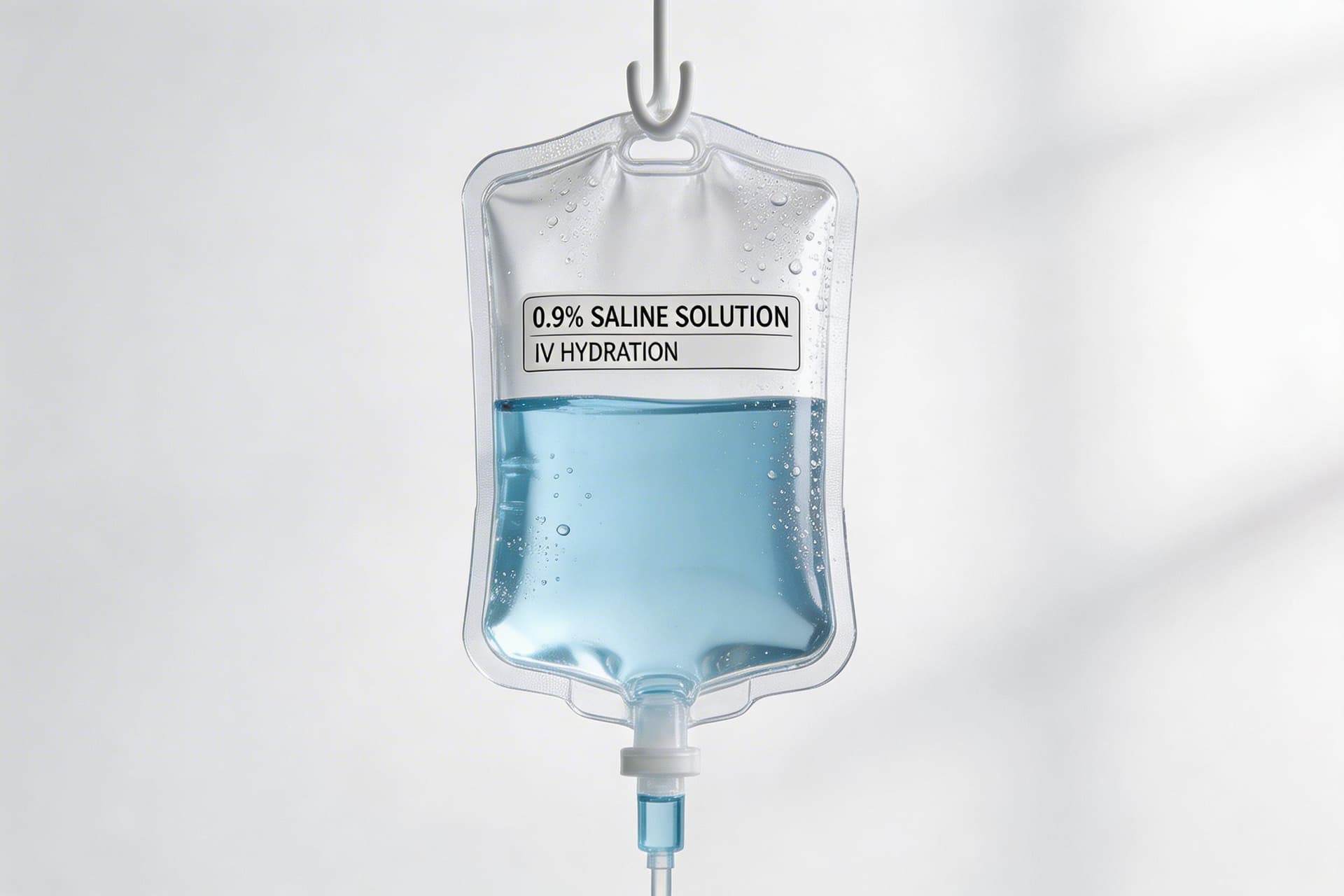
The foundational IV therapy. A balanced saline solution with electrolytes replenishes fluids and minerals directly into your bloodstream for near-instant hydration. The most affordable and fastest IV option — ideal as a standalone treatment or base for add-ons.
How IV Hydration IV Therapy Works
When you drink water, it must pass through the gut before reaching your bloodstream, and if you are nauseated or vomiting that may not happen at all. IV hydration delivers fluid and electrolytes directly into a vein, so 100% is immediately available to restore blood volume and correct the sodium, potassium, and magnesium losses that cause headaches, fatigue, and dizziness.
The fluid itself is typically normal saline (0.9% sodium chloride) or lactated Ringer’s, sometimes with added electrolytes or vitamins. Because it expands blood volume quickly, people with heart failure or significant kidney disease need medical caution — the same speed that helps a dehydrated athlete can overload someone who cannot handle extra fluid.
What's in a IV Hydration Drip?
| Ingredient | What it does | Typical dose |
|---|---|---|
| Normal saline (0.9% NaCl) | Restores blood volume and corrects fluid loss; the standard hydration fluid. | 500–1,000 mL |
| Lactated Ringer's (optional) | A balanced electrolyte fluid sometimes used instead of plain saline. | 500–1,000 mL |
| Potassium chloride | Replaces potassium lost through sweat, vomiting, or alcohol. | Varies |
| Magnesium (optional) | Electrolyte that supports muscle and nerve function. | 1–2 g |
What to Expect During a IV Hydration Session
After a brief intake, a nurse places the IV and the bag runs in over about 30 minutes — the quickest of the common drips. Many people feel clearer-headed and less fatigued by the end, simply from restored fluid and electrolytes.
There is no downtime. IV hydration is often chosen as a first IV experience or as the base to which add-ons (B12, anti-nausea medication, vitamins) are attached. Mobile providers deliver it at home, at events, or after sports.
Benefits of IV Hydration
Who is IV Hydration Best For?
- Hangover dehydration
- Athletic recovery
- Illness-related dehydration
- Travel fatigue
- Heat exhaustion recovery
- First-time IV therapy
IV Hydration IV Therapy Cost
Starts from
$99
Typical high
$175
Session
30 min
What affects IV Hydration pricing?
| Clinic vs. mobile (at-home) service | Mobile visits add a $25–$50 travel fee |
| Add-ons (glutathione, anti-nausea, extra B12) | +$25–$75 each |
| Dose / volume of the infusion | Higher doses sit at the top of the range |
| Membership or multi-session packages | Often 10–25% lower per session |
| Local market & cost of living | Major metros trend higher |
Evidence & Research
The physiology of IV fluid resuscitation is among the most established in medicine — it is standard hospital care for significant dehydration, vomiting, and heat illness.
For mild-to-moderate dehydration in otherwise healthy people, however, the research is clear that oral rehydration works about as well. Studies such as Spandorfer and colleagues (Pediatrics, 2005) found oral rehydration comparable to IV for many patients, and the WHO has long promoted oral rehydration solution as first-line for most dehydration.
Bottom line: IV hydration is fast and fully absorbed and is genuinely useful when you cannot keep fluids down or need rapid recovery. For routine, everyday hydration in a healthy person, it offers speed and convenience rather than a true medical advantage over drinking fluids.
IV Hydration vs. Other IV Drips
IV Hydration vs. Hangover Recovery
Hangover Recovery guideThe hangover drip is IV hydration plus B vitamins and optional anti-nausea/anti-inflammatory medications. Choose plain hydration to rehydrate; choose the hangover blend when you also need symptom relief.
IV Hydration vs. Myers' Cocktail
Myers' Cocktail guidePlain hydration is fluids and electrolytes only. A Myers' adds magnesium, calcium, B vitamins, and vitamin C for micronutrient support — more comprehensive, but slower and pricier.
Important Considerations
Always disclose the following conditions to your provider before receiving IV Hydration therapy:
- Congestive heart failure
- Severe kidney disease
- Pulmonary edema
- Hypernatremia
IV Hydration IV Therapy — FAQs
Sources & References
- Spandorfer PR, et al. Oral versus intravenous rehydration of moderately dehydrated children. (2005) — Pediatrics
- Oral rehydration salts (ORS) — guidance on dehydration treatment — World Health Organization
Medical Disclaimer
This content is for informational purposes only and does not constitute medical advice. IV therapy should only be administered by licensed medical professionals. Always consult a qualified healthcare provider before starting any IV therapy treatment.